
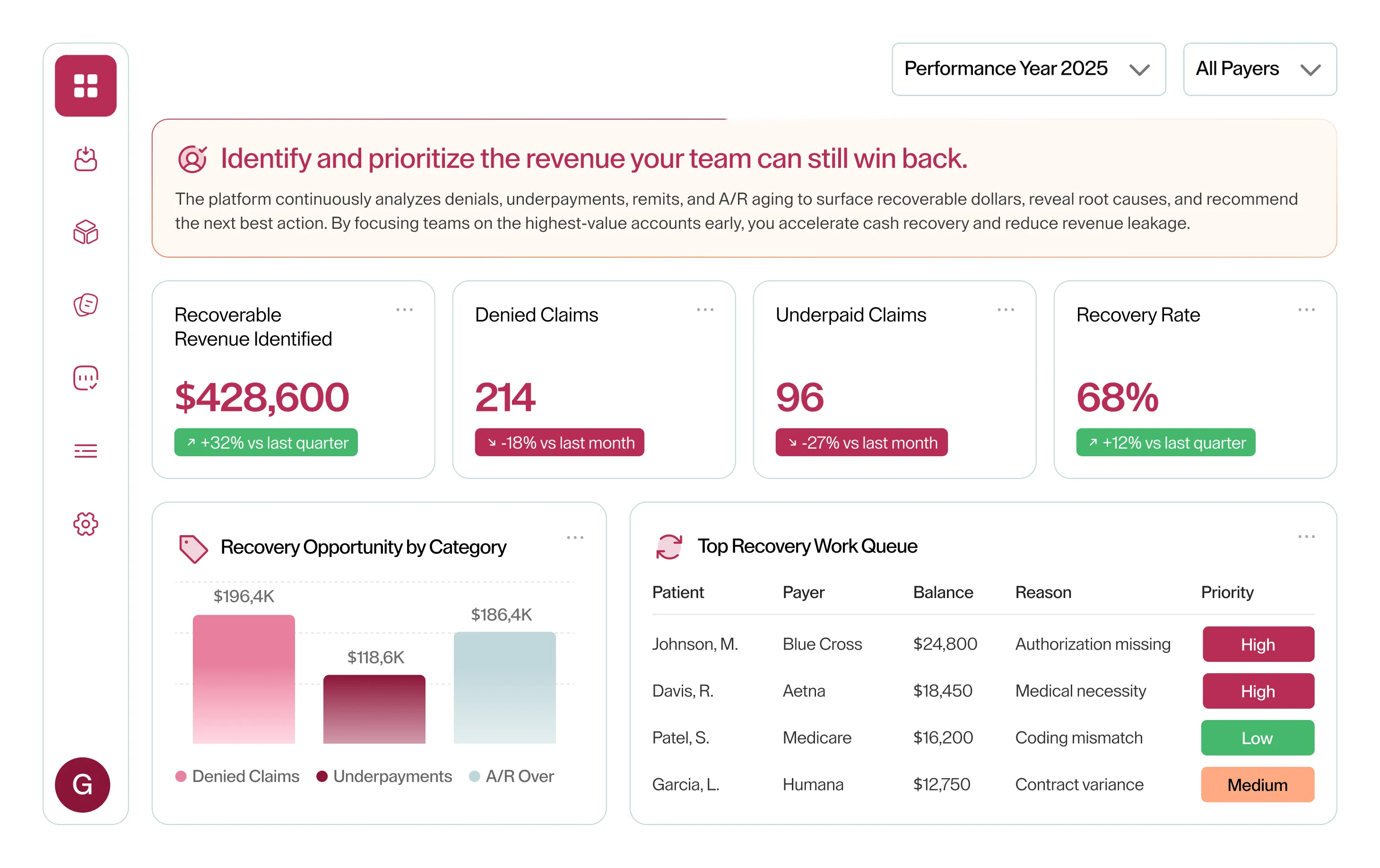

Faster reimbursement, fewer denials, and less written off at every step
.svg)
Complete Revenue Cycle, Covered
The platform runs the coverage check before the visit, the coding, the denial, the posting, and the last patient balance.
.svg)
Audit-Safe by Default
Every code, appeal, and posting is tied to the record it came from, ready to defend.
.svg)
Built Around Your Workflow
Payer policies, contracts, and CMS updates are encoded into workflows built around your reality.
.svg)
Set Up and Run With You
Our engineers build the workflow, stand it up alongside your team, and stay on it as payers and contracts change.
Recover what you're owed, before it stops being recoverable
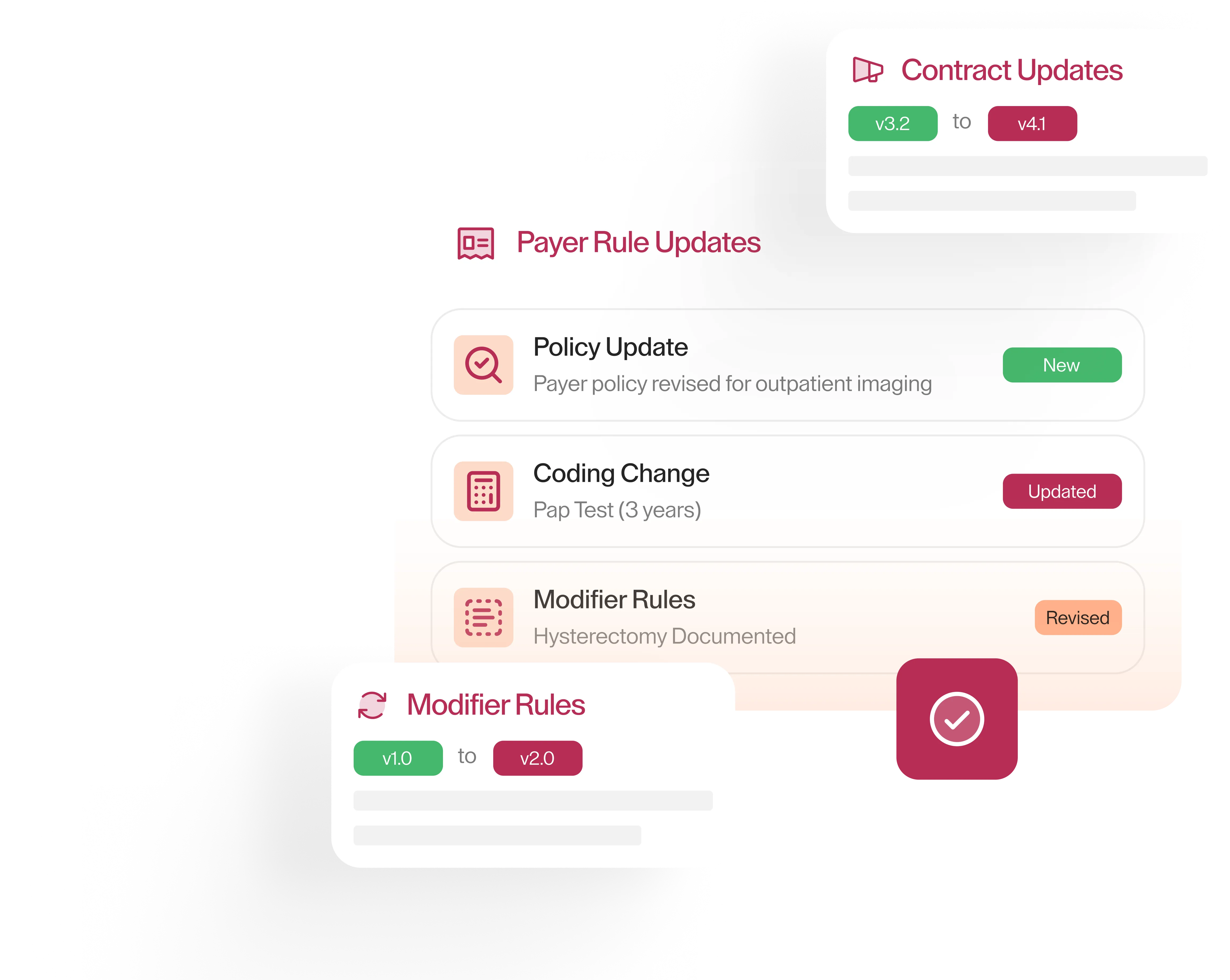
Payer policies, edit sets, and CMS updates change through the year. By the time a team has caught up on what moved, claims have already gone out under the old rules.
.webp)
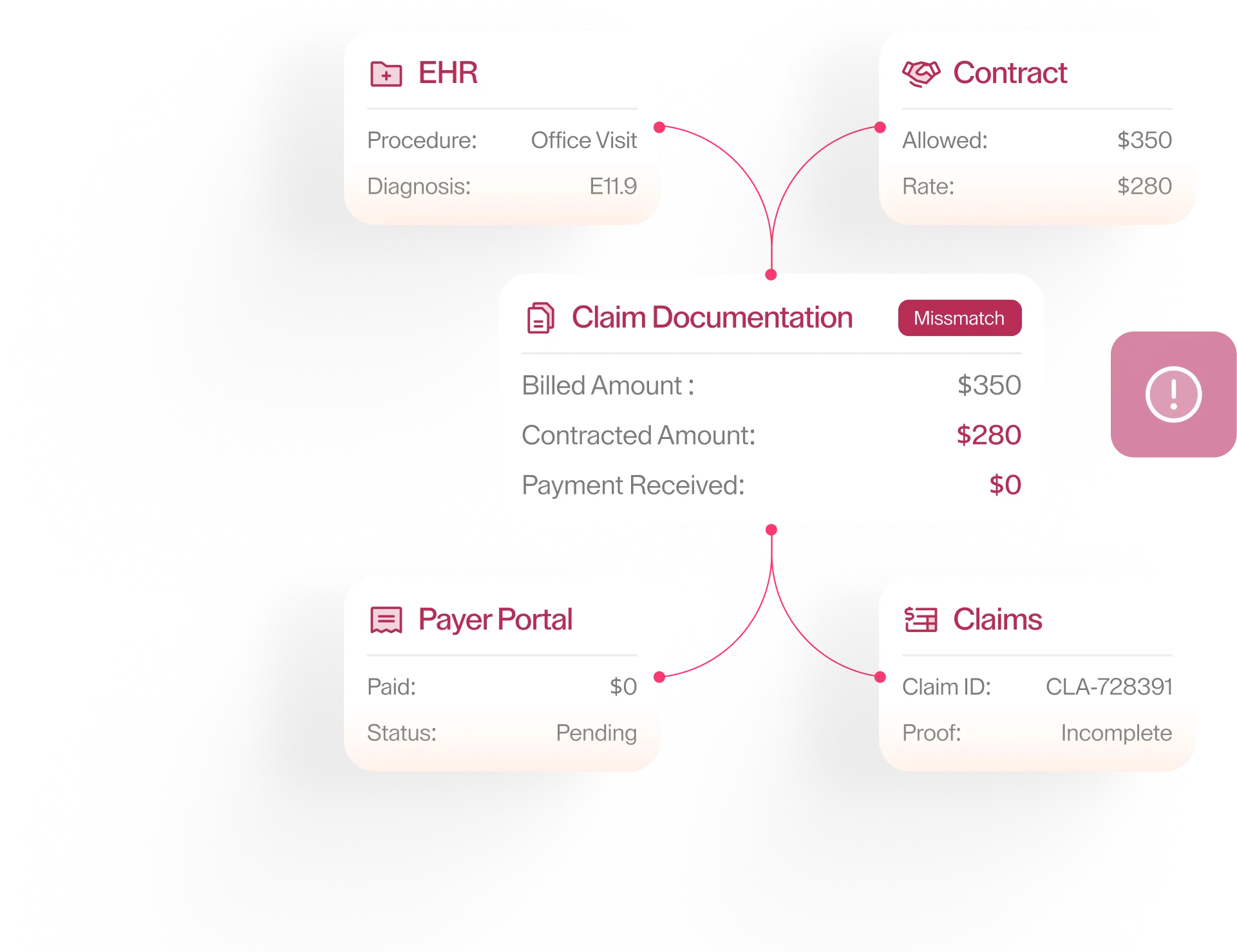
What you delivered sits in notes and charts. What you were owed sits in contracts. What you were paid sits in payer portals. Until those line up, the money is invisible.
.webp)
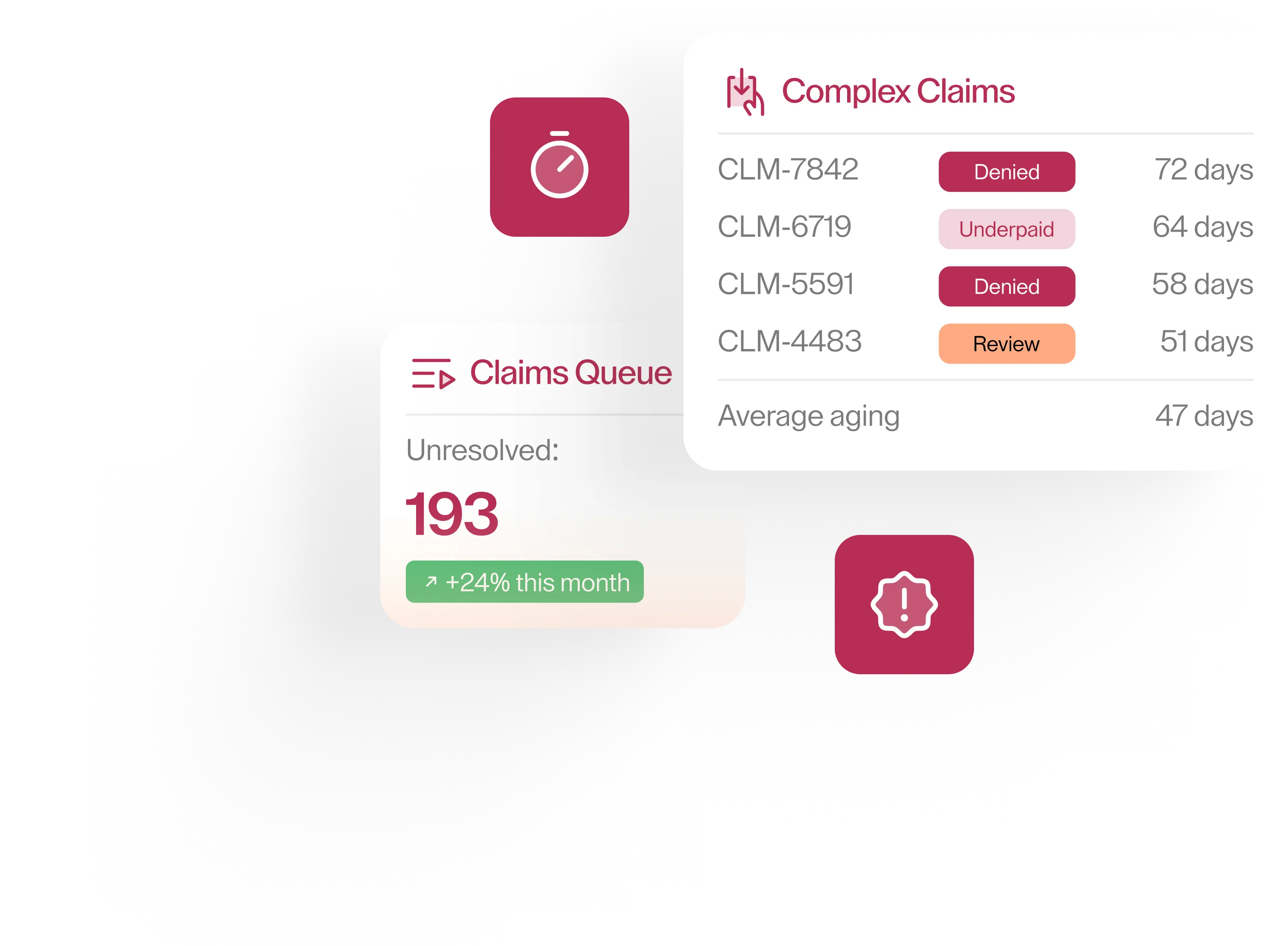
Reworking yesterday's denial always loses to today's batch. So the easy claims get worked, the complex ones age, and the write-off is a decision nobody actually made.
.webp)
The new way to run a revenue cycle - continuous, evidenced, every step
Cover
Work every step, including the ones that usually wait.
The front end runs clean
Eligibility checked at scheduling and prior auth confirmed before the service, so the claim starts clean instead of getting fixed later.
The middle decides the money
Codes assigned from the documentation, then scrubbed against edits, modifiers, and each payer's own requirements before submission.
The back end gets worked
Denials, aging AR, payment posting, and patient balances handled continuously, not whenever the queue clears.
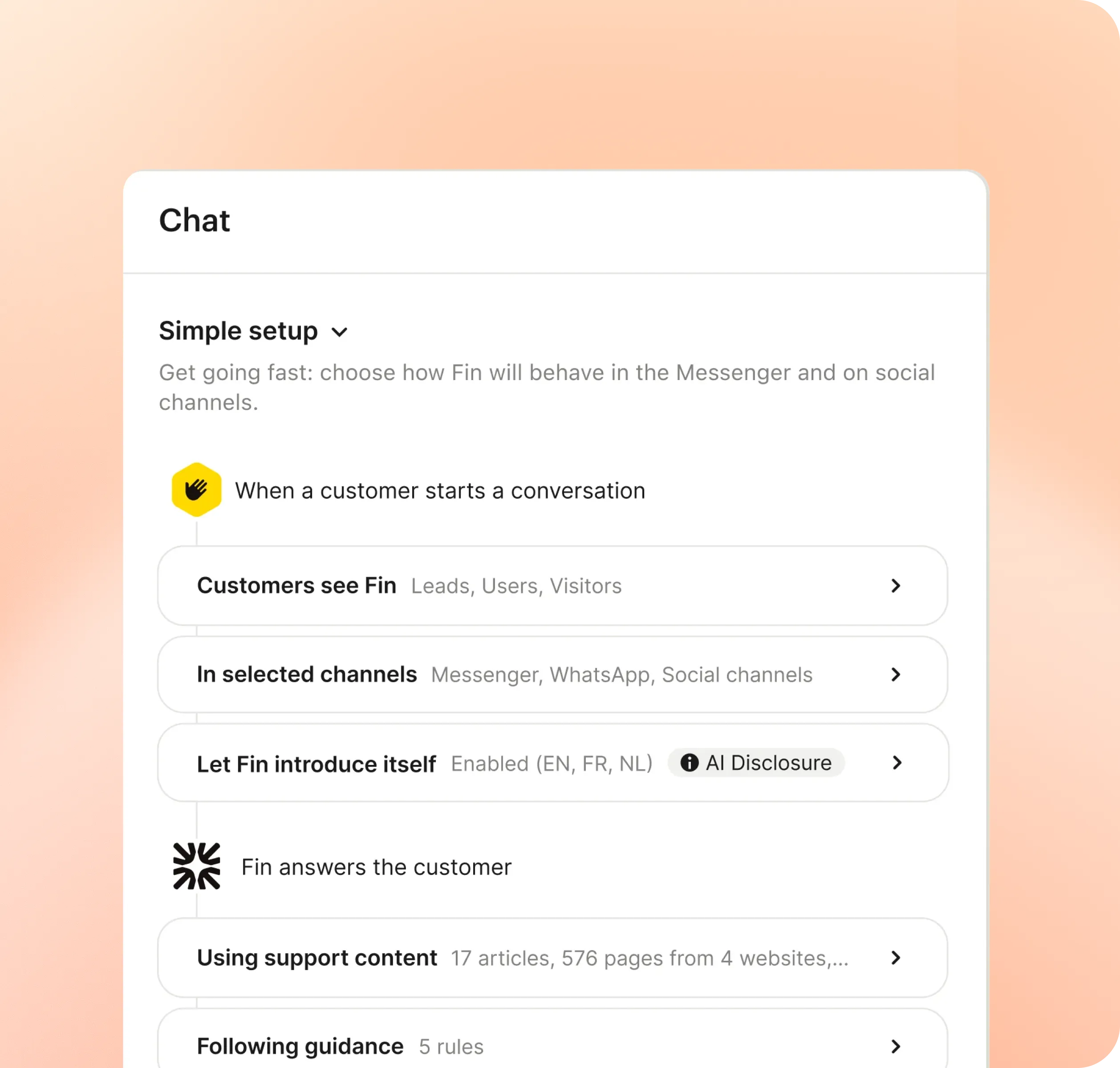
Built around your reality.
No two revenue cycles run the same way. We build yours.
Your payers, your rules
Payer policies, contracts, and edit logic get built into the workflow, so what runs is what you actually work under.
Your systems, not ours
We build around the EHR, billing system, and clearinghouse you already run, instead of moving you onto something new.
Deployed, not handed over
Our engineers stand it up alongside your team, and stay on it as your payers and contracts change.
.webp)
Prove every dollar.
Every figure on the screen opens, down to the line in the note.
Code to evidence
Every code maps to the line in the documentation that supports it and the guideline that permits it.
Coded to what the record says
Codes the documentation supports get claimed. Anything it does not support gets flagged before the claim goes out.
Ask in plain English
Question your own claims data in plain language and get a verified answer back, with the records attached.
.webp)
Run it with your team.
Built with you, stood up with you, and kept current with you.
We stay on it after go-live
Implementation is the start, not the handover. Our team keeps the workflow current as payers, contracts, and volumes change.
Our specialists, if you want them
Coders, billers, and AR specialists from our team can work the queues alongside yours. Scope it to the steps where you need the hands.
You still set the guardrails
Routine work runs on its own. Coding calls and medical necessity decisions come to your team, with the context already attached.
.webp)
Get the cycle right, and the revenue follows
Every claim worked in time is money back in the door, a payer held to the contract, and a write-off that never happens.

Collect more of what you billed
Work every denial, underpayment, and aging account, not just the ones that fit in the day.
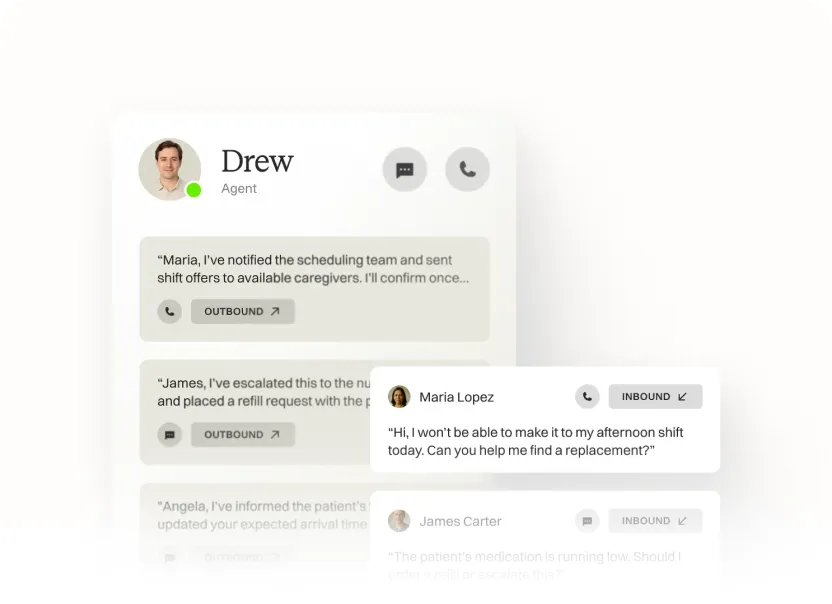
Keep it through the audit
Conservative by default, with the record and the rule behind every code, appeal, and posting.
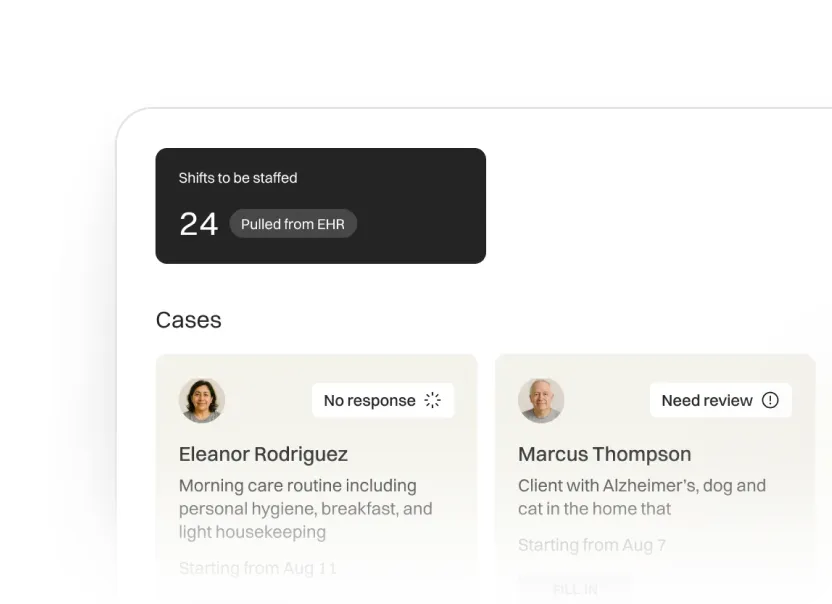
No need to hire to keep up
Cover the whole cycle without the coders, billers, and AR callers nobody can find.
Measures live on the platform
Authorization & Referral
The platform checks whether the service needs an authorization, whether one is on file, and whether the documentation supports medical necessity, before the procedure happens.
Medical Coding & Scrubbing
The platform reads the whole encounter, notes, procedure reports, labs, and imaging, then assigns codes across ICD, CPT, and E&M and scrubs the claim against edits, modifier rules, bundling logic, and payer-specific requirements before submission.
Pre-Registration & Eligibility
The platform checks eligibility at scheduling, confirms active Medicaid, and applies sliding scale criteria before the patient arrives, so coverage is settled before the claim is built.
Charge Capture & Documentation
The platform reconciles documentation against charges across every setting, including behavioral health and telehealth, and flags what was delivered but never captured.
Claim Submission & Clearinghouse
Claims go out electronically through your clearinghouse and get tracked to acceptance. Rejections are caught and corrected instead of sitting in a queue nobody opens until month end.
Built around your cycle, and run with your team
Most vendors sell a tool and leave the running of it to a team you don't have. We build the workflow around your payers, your contracts, and your systems, and run it alongside your people.
The old way
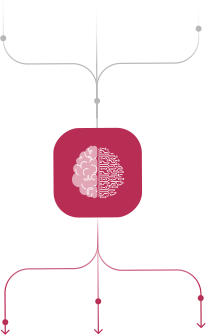
With 101 GenAI
Your data, your control
Privacy and security
SOC 2 Type II audited, HIPAA and GDPR compliant with end-to-end encryption
Flexible deployment
Self-hosted in your VPC or private cloud—your data never leaves your secure environment
Audit-ready
Complete evidence trails with tamper-evident logs for regulatory reviews
Role-based access
Granular permissions aligned with your organizational requirements
Integration Ready
Integration with health records, CRMs, cloud telephony, and cloud providers.

More use cases


Maximize your value-based payouts
101GenAI continuously tracks care quality across your clinical records to surface and close gaps, ensuring your value-based payouts reflect the care you actually delivered.
.svg)
.webp)

Capture the MIPS credit you've earned
101GenAI automatically transforms your clinical documentation into audit-ready MIPS results to capture earned credit and protect your Medicare payments.
Frequently Asked Questions
Which parts of the revenue cycle do you cover?
All of it, from pre-registration and eligibility through patient collections. Coding and scrubbing, denial management and AR, and payment posting and reconciliation go deepest, because that is where the most revenue moves.
What data can you read?
The records you already keep: clinical notes and charts, charge and billing data, remittance files, payer contracts, and clearinghouse responses. Structured and unstructured. If the evidence is in your data, the platform can use it.
Do the agents act on their own?
Only where you allow it. You configure the line by step, by payer, and by dollar value. Routine, rules-based work runs unattended. Anything needing a human read routes to your team with the full context attached.
We run a particular EHR and billing setup. Is that a problem?
No. The platform connects to the EHR, billing system, and clearinghouse you already run, and sends results back into the systems your team works in. No rip and replace.
What happens when a payer changes its rules?
You upload the updated policy or edit set and the platform re-reads the logic and adapts. There is no rebuild and no re-implementation cycle.
Do you catch coding errors in both directions?
Both. Undercoding leaves money you earned on the table. Coding beyond what the record supports creates audit exposure. The platform is conservative by default and will not claim what the record does not support.
Is this built for an organization our size?
It is built for provider organizations with enough claim volume that the work outruns the team, from multi-site physician groups through to health systems.
Where does our data live?
In your environment, if you want it there. Self-hosted VPC deployment is supported. SOC 2 Type II, HIPAA, and GDPR compliance come standard, with complete audit trails.